
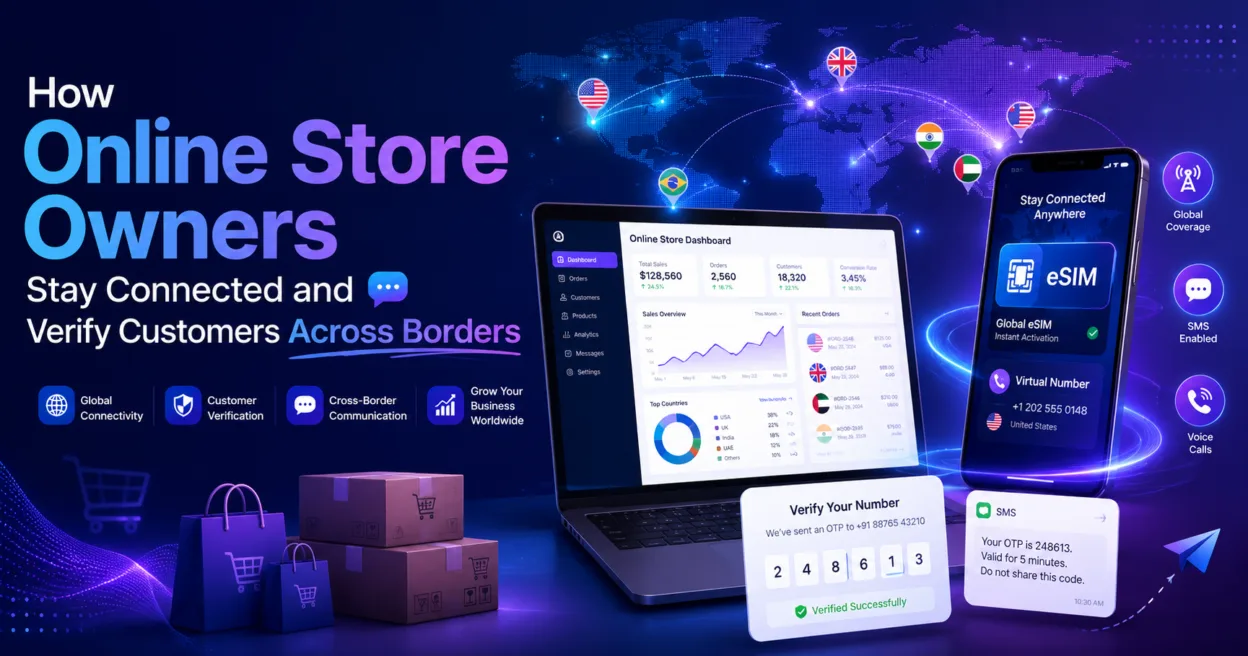
Running an online store allows you to work from anywhere. You’re no longer stuck at a desk in one country. The tools for customer communication have also adapted to this freedom. A store owner can approve orders from a café in Lisbon. They can also answer a local support call from a buyer in Mexico. Plus, they can confirm a payment alert on the same phone.
TThis works well if the connectivity and numbers are set up right. Services like eSIM Plus simplify this by managing mobile data and virtual lines in one spot. The store itself might run on Magento or any other platform, but the part that breaks first when you cross a border is rarely the catalog. It’s the phone, the verification codes, and the support line falling silent when no one can get online.
This article covers connectivity in e-commerce. It discusses how to keep your store accessible, verify customers easily, and create a local presence in markets where you lack an office. None of it requires a technical overhaul, and most of it costs less than a single paid ad campaign.9

Connectivity Is a Store Problem, Not Just a Travel One
When people picture an eSIM or a roaming plan, they think of holidays. For a store owner, the stakes are different. A dropped connection abroad can leave an unverified payment hanging, a fraud alert ignored, or a customer waiting an hour for a reply that never arrives. Lost connectivity translates directly into lost orders.
The shift to eSIM technology, especially options like an esim Spain plan for business trips, has made this easier to manage. Instead of hunting for a local SIM on arrival, an owner can load a data plan for the destination before the flight and switch to it on landing. The store is always monitored. The admin panel is easy to access. Order notifications keep coming in, all without a roaming bill that matches the day’s revenue.
Phone Verification Still Matters for Stores
Email verification is easy to fake. A throwaway inbox is quick to set up. That’s why many stores add SMS or phone verification for risky actions. It lowers fake accounts, cuts card-testing fraud, and adds a step before refunds or address changes.
Phone verification earns its place in a few specific spots:
- Account sign-up, to filter out bulk fake registrations before they hit your database.
- Checkout for high-value or cash-on-delivery orders, where fake orders cost you shipping.
- Password resets and email changes, the moments attackers target most.
- Refund and address-change requests, where a quick code confirms the real account holder.
- Loyalty or first-order discounts, to stop one person from claiming the offer fifty times.
The catch is friction. Every extra step costs you some buyers, so verification should sit on the risky actions, not on every click. Used with restraint, it protects the margin without scaring off honest customers.
Virtual Numbers Give a Store a Local Voice
A buyer in another country reads a local number as a sign that the seller is reachable and real. A foreign dial code, by contrast, plants a small doubt right before checkout. Virtual numbers solve this without a second phone: a line registered in the customer’s country rings through to the device you already carry.
For a store, that local presence does real work:
- Support calls and order questions answered on a number that looks domestic to the caller.
- A separate line for the business, keeping store traffic off a personal phone.
- SMS order updates and delivery notifications sent from a recognizable local sender.
- One device holding numbers from several markets, so a small team can cover three countries.
Because calls and texts route over the internet, the owner can pick up from anywhere, and the customer never knows the difference. That gap between how local it feels and where the owner actually sits is the whole point.
SIM, eSIM, or Virtual Number: Which Does What
These three get muddled, and they solve different problems. The short comparison below sorts them out before you spend on the wrong one:
| Tool | Best for | Limitation |
| Physical SIM | A primary line in your home country | Tied to one device; swapping is needed when travelling |
| eSIM data plan | Staying online abroad without roaming fees | Mainly data; not a local customer-facing line |
| Virtual number | A local presence and customer calls or SMS | Some banks reject it for security checks |
Most store owners end up using two of the three together: an eSIM for data while moving, and a virtual number for the local face customers see. The physical SIM stays as the personal line.
Setting It Up Without Overcomplicating It
The setup is lighter than it sounds, and the order matters more than the budget. Doing it step by step keeps you from paying for tools you do not need yet:
- Decide which markets actually need a local number, based on where your real orders come from.
- Add an eSIM data plan for any country you travel to, loaded before departure.
- Point your virtual numbers at the app or phone you already use for support.
- Switch on SMS verification only for the risky actions listed earlier, not the whole site.
- Test the full path yourself, placing a real order and making a real support call before going live.
That last step catches most problems. A number that rings out or a verification code that never arrives does more damage than having no system at all, so a five-minute test is worth the trouble.
Mistakes that Quietly Cost Orders
A handful of errors show up again and again with store owners, and almost none of them need money to fix. They tend to come from setting up a tool and forgetting to check it:
- Verifying every action, which adds friction and pushes honest buyers out of checkout.
- Choosing a virtual number that cannot receive SMS, then needing it for codes.
- Relying on roaming and getting a bill that wipes out a day of profit.
- Forwarding support calls to an app nobody on the team actually monitors.
- Using a single personal number for the store, so private and business calls blur together.9
Each of these is a process slip, not a software fault. A short checklist and an occasional test run keep them from turning into refunds and one-star reviews.
The takeaway for store owners
E-commerce stopped being location-bound, but customer trust did not. Buyers still want a store that answers, verifies, and feels local, whether the owner is at a home office or three time zones away. The connectivity layer combines an eSIM for data and a virtual number for local use. It keeps the experience seamless as you move. It’s cheap, easy to set up, and keeps communication flowing. This helps customers feel connected, no matter where the work takes place.