
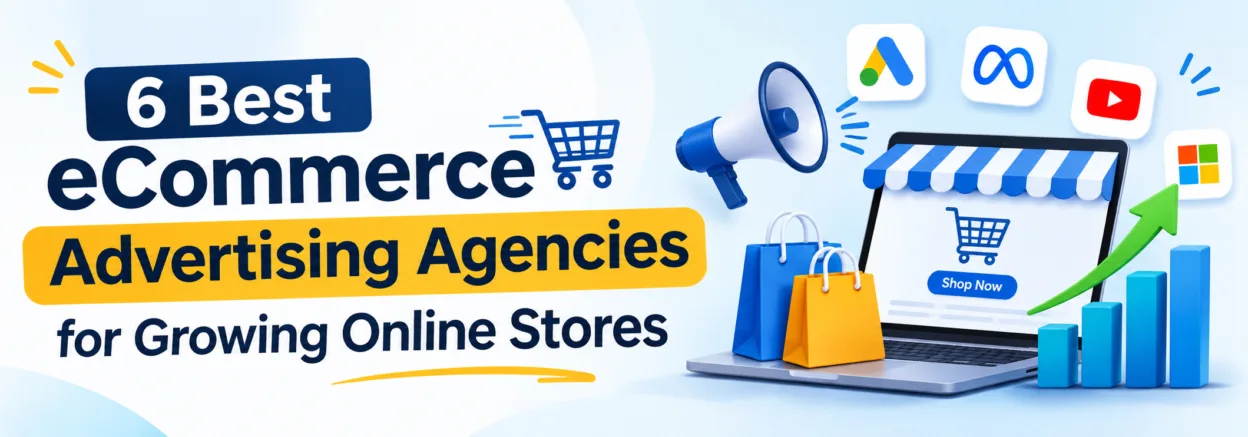
Growing online stores usually hit one of two walls. Some need more qualified traffic than their in-house team can buy at a healthy cost. Others already have traffic but lose sales to tired creative or a landing page nobody has tested.
The right agency depends on which problem you need to solve first. This shortlist compares six ecommerce advertising agencies for marketing leads at established stores, based on documented services, testing approach, platform experience and pricing transparency.
Key Takeaways
- Our top pick coordinates creative, landing page testing and media buying in one acquisition-focused process.
- KlientBoost pairs paid search and social with ongoing conversion testing and offers three custom pricing options.
- Inflow suits stores with deep catalogs and documented platform needs, including Magento, Shopify and BigCommerce.
- Common Thread Collective offers a forecasting-led operating model for direct-to-consumer brands.
- SmartSites publishes a $2,500 monthly ad-spend minimum for ecommerce, separate from management fees.
- Disruptive Advertising starts with a free PPC audit before any paid engagement.
How We Picked These Agencies
We reviewed each agency’s official service pages and published pricing details in November 2026. We didn’t manage accounts or test campaigns, so this is a fit-based comparison rather than a performance ranking.
Our criteria were ecommerce focus, creative development, landing-page testing, product-feed and platform experience, reporting and how clearly each agency explains its scope and costs. When comparing proposals, keep management fees, ad spend, creative production and software as separate line items.
The 6 Best eCommerce Advertising Agencies
1. Intensify
Best for: Stores that want creative, landing pages and media buying planned together.
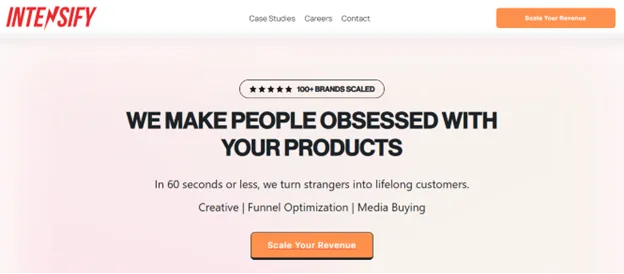
Our top pick is a Los Angeles agency focused solely on new customer acquisition for ecommerce brands. It reports more than 10 years in business, over 100 clients and $50 million in ad spend managed.
Pros
- Creative, funnel optimization and media buying in one workflow
- Offer and value-proposition development based on product, margin and competitor analysis
- New landing pages A/B tested against the original, then refined for revenue per session
- Video and graphic ads built around current TikTok and Instagram trends
Cons
- No published management-fee schedule, so pricing starts with a proposal
- Its acquisition focus may not suit stores looking for SEO-only or retention-only support
Why we picked it: For stores looking to outsource customer acquisition, Intensify connects the ad, the offer and the landing page in a single four-step process. Testing continues after launch, with landing-page and creative variations iterated over time, and the team works day to day through email, Slack and calls.
Pricing: Fees are quoted after a consultation, and the contact form asks about current monthly ad spend to scope the engagement. Ask for creative production, landing-page work and media spend as separate line items.
2. KlientBoost
Best for: Paid acquisition paired with structured conversion testing.
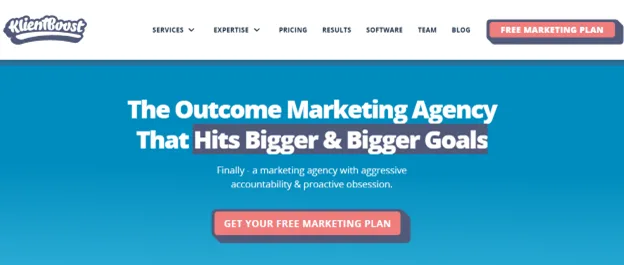
KlientBoost manages paid search and paid social with ongoing creative iteration. Its PPC offering includes landing-page testing, heatmap analysis and conversion-rate optimization.
Pros
- Paid search and paid social management
- Google Shopping, Meta catalog campaigns and product-feed optimization
- Landing-page and ad-creative testing built into its PPC approach
- A free marketing plan that produces three custom pricing options
Cons
- Exact fees require a proposal
- Also serves SaaS and B2B clients, so it isn’t ecommerce-only
Why we picked it: KlientBoost fits stores that want paid campaigns and testing in the same brief. Confirm the testing cadence and who builds page variations before comparing proposals.
Pricing: The marketing-plan process returns three custom options scoped to your goals and channels rather than fixed monthly plans.
3. Inflow
Best for: Established stores with deep catalogs and specific platform requirements.
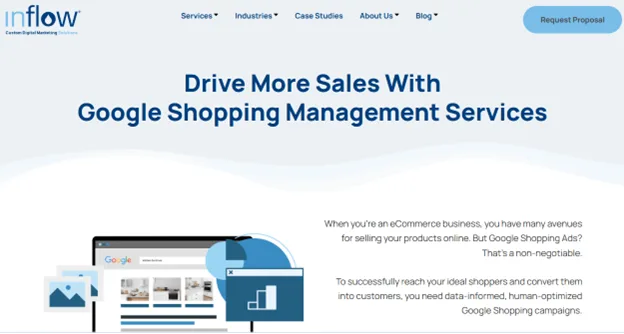
Inflow runs Google Shopping campaigns with product-feed optimization and search advertising across Google, Microsoft, Amazon and YouTube. It documents experience with Magento, Shopify, BigCommerce, WooCommerce, Volusion and proprietary builds.
Pros
- Google Shopping with product-feed optimization
- Search options across Google, Microsoft, Amazon and YouTube
- Paid social alongside paid search
- CRO and analytics services within its ecommerce practice
Cons
- Management pricing isn’t published
- Its suggested ad budget may exceed a lean test budget
Why we picked it: Inflow suits stores where feed management and platform fit shape the brief. Magento merchants in particular can use its documented platform experience as a starting point for scoping.
Pricing: Fees require a custom quote. Inflow notes that most ecommerce sites spend at least $3,000 to $5,000 per month on PPC ads, which is media spend rather than an agency fee.
4. Common Thread Collective
Best for: Direct-to-consumer brands that want forecasting tied to execution.
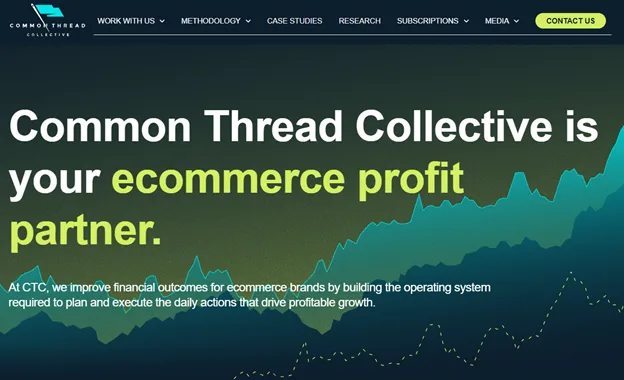
Common Thread Collective’s Prophit Engine pairs a dedicated operator with software and specialist resources. The operator owns the forecast and daily execution.
Pros
- A dedicated Prophit Engineer for forecasting and execution
- Software supporting the operator led model
- Specialist resources behind the operator
Cons
- The integrated model involves more coordination than a campaign-only brief
- Pricing isn’t published
Why we picked it: Common Thread Collective suits brands that want planning and marketing execution connected. Clarify which decisions stay with your marketing and finance teams before signing.
Pricing: The service page doesn’t list a monthly fee, so request a custom proposal with software and specialist costs itemized.
5. SmartSites
Best for: Google Shopping execution with a clear budget threshold.
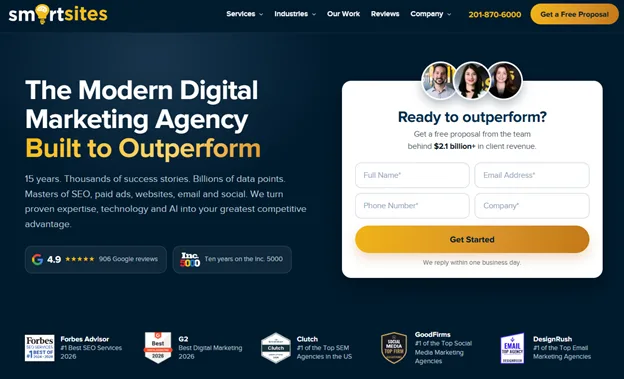
SmartSites handles Merchant Center setup, product-feed work and Standard Shopping and Performance Max campaigns. It reports orders and revenue through its Client Hub.
Pros
- Merchant Center setup and feed management
- Standard Shopping and Performance Max campaigns
- Campaign planning that accounts for product margins
- A published ecommerce ad spend minimum for early screening
Cons
- The $2,500 monthly minimum covers ad spend only, before management fees
- Landing pages and ad creative are quoted separately
Why we picked it: SmartSites is a practical choice for stores focused on Google Shopping ads. Its published spend threshold helps marketing leads screen the fit before requesting a proposal.
Pricing: Expect a custom management fee plus at least $2,500 a month in ad spend. Setup is free, but creative and landing-page work can add separate costs.
6. Disruptive Advertising
Best for: Stores that want an outside audit before committing to management.
Disruptive Advertising reviews existing accounts, targeting and bidding to spot waste and opportunities. Its ecommerce approach factors in cost of goods sold, customer lifetime value and average order value.
Pros
- A PPC audit covering account structure, targeting and bidding
- Ecommerce diagnosis built around margins, lifetime value and order value
- A game plan to discuss before any paid work
- Services spanning paid media, Amazon, creative, analytics and landing pages
Cons
- Managed service fees aren’t published
- Serves multiple industries rather than ecommerce alone
Why we picked it: Disruptive Advertising fits stores that want a diagnosis before deciding on ongoing management. Ask whether you can execute the game plan in-house if you decline further work.
Pricing: The audit and game plan are free, while managed services are a separate paid engagement quoted by proposal.
How to Choose the Right eCommerce Advertising Agency
Start with your biggest bottleneck. If traffic is the problem, prioritize media buying and feed management. If conversion is the problem, prioritize creative and landing page testing.
Then compare proposals on the same terms. Ask each agency to separate management fees, ad spend, creative production and implementation work. Confirm who owns the ad accounts and creative assets, how results are reported and what the cancellation terms are.
Conclusion
The best ecommerce advertising agency is the one that fits your immediate growth problem. Our top pick leads for stores that want creative, landing-page testing and media buying planned as one acquisition process.
KlientBoost suits experimentation heavy briefs, and Inflow fits stores with complex catalogs and platform needs. Common Thread Collective offers a forecasting-led model, SmartSites gives a clear spend threshold and Disruptive Advertising provides an audit first entry point. Request comparable proposals from the agencies that match your priorities before committing.
FAQ
How much does an ecommerce advertising agency cost?
Most agencies quote custom management fees on top of your ad spend. Some publish spend minimums, such as $2,500 a month, so ask for fees and media budget as separate figures.
What’s the difference between a management fee and ad spend?
The management fee pays the agency for its work. Ad spend goes directly to platforms like Google and Meta to run your campaigns.
Should an ad agency also handle landing pages?
It helps. When the same team controls the ad and the page it sends traffic to, it’s easier to test offers and improve conversion rates.
Who should own the ad accounts?
Your business should. Make sure contracts confirm you own the ad accounts, data and creative assets if the engagement ends.