
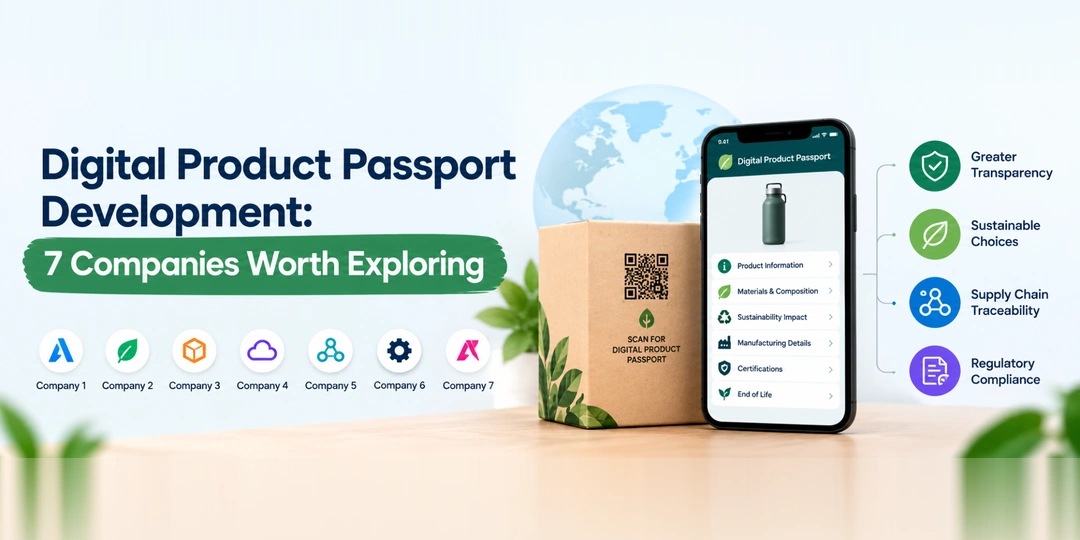
A product passport is easy to imagine from the customer’s perspective. Scan a QR code, open a page, and find information about the product’s materials, origin, repair options, or environmental characteristics.
For the manufacturer, the work begins much earlier. Product specifications may be stored in an ERP system, supplier declarations arrive as separate documents, and certification records require periodic updates. Bringing those records together takes considerably more effort than creating the page that displays them.
The EU’s Ecodesign for Sustainable Products Regulation (ESPR) has increased interest in Digital Product Passport development. However, requirements will differ by product category, and manufacturers need to distinguish established obligations from those still being developed.
The seven companies below offer different technical routes, ranging from custom software engineering to established traceability and passport platforms.
1. Lionwood Software – Custom DPP software development
Lionwood Software focuses on building Digital Product Passport systems around a manufacturer’s existing technology and operational requirements.
Its services cover DPP strategy, software development, data engineering, system connections, and ongoing support. The company also offers ready-made DPP functionality alongside custom development.
This flexibility becomes useful when a business already operates several applications that hold different parts of a product’s history. Engineering specifications might sit in PLM software, commercial descriptions in a PIM system, and supplier documentation in separate databases.
Lionwood develops the connections needed to bring these records into a workable passport environment.
DPP development services include:
- Custom product passport platforms with administration tools and QR-linked product records.
- ERP, PLM, and PIM connections for exchanging product information.
- Supplier portals for collecting declarations, certificates, and material details.
- Compliance documentation management and lifecycle data tracking.
- Technical maintenance as product requirements and business processes change.
A manufacturer considering Lionwood should examine which existing applications can supply dependable data and where custom development would be necessary.
The company’s offering is particularly relevant to businesses that want control over the software design and expect their DPP requirements to extend beyond a standard implementation.
2. Circularise – Traceability for complex material supply chains
Circularise concentrates on tracing materials through supply chains where information passes between numerous independent organizations.
A finished component may contain materials supplied, processed, and transformed by several businesses. Establishing its provenance requires dependable records from those earlier stages.
Circularise provides traceability technology and controlled data-sharing functionality. Its work includes Digital Product Passport projects involving batteries, industrial materials, and solar technology.
In October 2026, the company announced a live DPP for a repairable solar module developed through the FAIR-PV project in Amsterdam.
What distinguishes Circularise?
- Attention to material provenance and chain-of-custody information.
- Controlled sharing of commercially sensitive supply chain data.
- Applications involving recycled materials, batteries, and industrial products.
Circularise deserves consideration when the difficult part of DPP implementation lies outside the manufacturer’s own systems. Buyers should investigate how suppliers contribute evidence and how that information is verified.
3. Kezzler – Digital identities for large product volumes
Consider a manufacturer producing millions of consumer products annually. Every batch or individual item may need an identifier that connects the physical product to its digital information.
Managing those identities across production, distribution, and customer interactions requires software capable of handling considerable data volumes.
Kezzler develops connected-product technology, including product identification, traceability, and Digital Product Passport applications.
Its platform is designed to connect information across existing enterprise systems without requiring companies to replace their entire technology environment.
Three capabilities worth examining:
- Product identification: Connecting physical goods to digital records through unique identifiers.
- Enterprise connectivity: Bringing information together from different business applications.
- Large-scale operations: Supporting extensive product datasets and substantial volumes of digital interactions.
Kezzler is an option for manufacturers and consumer brands that need product identities managed across large inventories.
During a technical evaluation, it is worth testing how identifiers remain associated with the correct records after product updates, returns, or distribution changes.
4. TrusTrace – Product passports for fashion and textiles
A clothing brand may know where its finished garments were assembled but have less reliable information about the earlier stages of production.
Fibre sourcing, spinning, dyeing, finishing, and garment manufacturing can involve different suppliers. Information about certified materials may arrive through documents that are difficult to connect to individual products.
TrusTrace specializes in supply chain traceability and compliance software for fashion, footwear, and textiles.
Its DPP offering connects supplier information, product identifiers, digital records, and consumer-facing interfaces. The company has participated in passport pilots involving brands such as Kappahl, ETON, and Gina Tricot.
Particularly relevant functions include:
- Collection and processing of supplier and certification records.
- Traceability of materials across multiple production stages.
- Unique product identifiers linked to passport information.
- QR-based access to product data and updates.
TrusTrace may appeal to apparel companies that need to improve the quality of upstream information before publishing passports.
Its textile specialization is valuable, although businesses in unrelated industries should examine whether the platform suits their particular product requirements.
5. Spherity – Verifiable identities and controlled data access
A consumer checking a product passport may need material information and repair instructions. A regulator may require access to supporting compliance evidence. A commercial partner might need technical details that should remain confidential.
Spherity develops digital identity and data-sharing technology intended to address these different access requirements.
Its VERA platform supports DPP creation, publication, and management. The offering includes configurable permissions, verifiable credentials, and connections to industrial data-sharing environments.
Technical characteristics to investigate:
- Role-based permissions for public and restricted information.
- Verifiable credentials and digital identity management.
- Connections with environments such as Catena-X and Manufacturing-X.
- White-label passport interfaces and APIs.
These features make Spherity relevant to industrial manufacturers that exchange information with numerous business partners.
An evaluation should include a practical test of permissions: who can submit information, who can verify it, and what happens when access must be withdrawn.
6. Circulor – Battery passports and critical material tracking
Battery supply chains present demanding traceability problems. Materials such as lithium, nickel, and cobalt may pass through several organizations before reaching a battery manufacturer.
The EU Battery Regulation adds specific passport obligations for qualifying batteries from February 18, 2027.
Circulor specializes in supply chain traceability and battery passport technology. Its work includes a production-scale battery passport project with Volvo Cars and a battery energy storage passport pilot involving REPT Battero and TÜV Rheinland.
Its offering addresses several battery-specific needs:
- Tracing critical materials through supply chain transactions.
- Recording evidence associated with responsible sourcing.
- Managing battery passport information and regulatory attributes.
- Controlling access for different passport users.
For battery manufacturers, Circulor offers a specialized alternative to general-purpose product passport software.
The evaluation should concentrate on the completeness of material records and the evidence available to support declarations. A passport’s usefulness depends heavily on the information supplied throughout the battery value chain.
7. Arianee – Digital passports throughout product ownership
Some products continue generating useful information long after they leave the factory.
A luxury watch may be authenticated, serviced, sold, and transferred to another owner. A household appliance may require repairs and eventually reach a recycling facility.
Arianee develops DPP infrastructure that connects product identities with information and events throughout their useful lives.
Its platform includes passport creation and management, APIs, product lifecycle tracking, and customer-facing interfaces.
Areas where Arianee may be useful:
- Product authentication and digital ownership records.
- Passport access through QR codes and web interfaces.
- Maintenance history, repairs, and ownership transfers.
- Connections to enterprise product information systems.
Arianee is particularly interesting for brands that expect digital passports to support after-sales services and secondary markets.
Prospective customers should examine how passport records remain available when products change owners and how historical information can be maintained over time.
Choosing between DPP development companies
The companies in this list address different parts of Digital Product Passport implementation. A custom development partner may suit a manufacturer with complicated internal systems. A specialized traceability provider may be preferable when the greatest difficulty involves suppliers or material provenance.
Before selecting a provider, businesses should test the proposed system with actual product records, including incomplete or outdated information.
The pilot should demonstrate how records are collected, corrected, published, and updated. It should also establish what happens when a supplier stops participating or a manufacturer changes software providers.
These questions reveal considerably more about a DPP solution than an attractive passport interface. The software must remain useful after the first passports have been published, when products, regulations, and supplier information begin to change.