

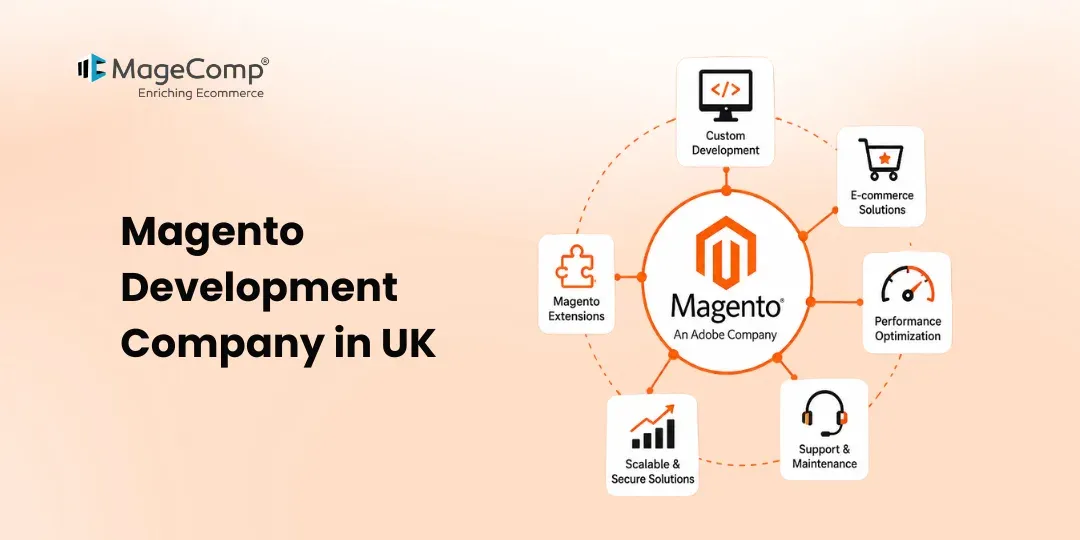
UK e-commerce brands have a habit of outgrowing off-the-shelf platforms faster than most. Once a catalog gets complex, or B2B pricing tiers enter the picture, or a merchant needs deep control over checkout logic, Magento 2 (Adobe Commerce) tends to be where they land. The platform gives you the flexibility, but only if the agency building it actually knows what they’re doing.
The UK Magento development scene is a genuine mix: local boutique studios, larger full-service agencies, and offshore-hybrid teams serving UK clients remotely. None of that is inherently better or worse; it just changes what you should be asking before you sign a contract. Here’s a shortlist worth working through.
Top 10 Magento 2 Development Companies in UK
1. MageComp
Over a decade in the Magento and Adobe Commerce space, a library of 200+ extensions spanning checkout, marketplace, and B2B functionality, plus Shopify and WordPress work on the side. UK clients tend to work with us specifically because extensions and custom builds stay supported well past launch, not abandoned the moment the invoice clears.
Best for: Merchants who want a technical partner for the long haul, not a one-off vendor.
2. iWeb

iWeb has built a strong reputation as one of the UK’s more established Adobe Commerce agencies, working across strategy, design, and development rather than treating them as separate silos. They tend to serve mid-to-large UK retailers who want a partner capable of owning the whole commerce roadmap, not just the build.
Best for: Established UK retailers wanting a strategic, full-service partner.
3. Aware Digital

Aware Digital leans heavily into UX and conversion-focused design alongside its Magento development work. Their portfolio skews toward brands that care as much about how the store feels as how it performs technically, a useful combination when checkout friction is costing real revenue.
Best for: Brands prioritizing design quality and conversion rate alongside development.
4. Elogic Commerce
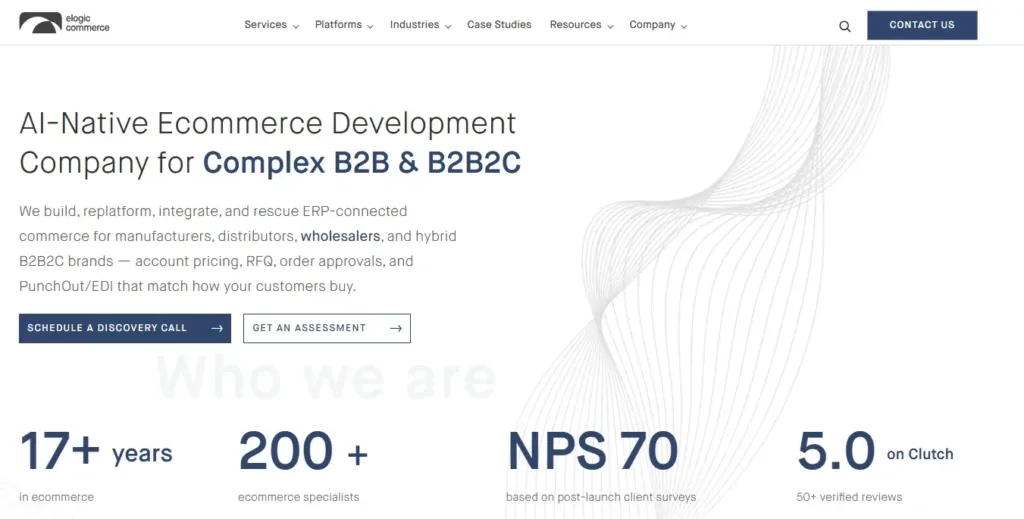
Elogic has built a niche around complex B2B and wholesale Magento implementations, custom pricing tiers, quote workflows, ERP integrations- the kind of requirements a standard B2C build doesn’t cover. Worth a serious look if your store isn’t a straightforward catalog-and-checkout setup.
Best for: B2B and wholesale merchants with complex pricing or workflow needs.
5. Dotsquares

Dotsquares runs a broader technology practice with Magento as one strong offering inside a wider web and app development portfolio. That breadth suits merchants who anticipate needing more than just a storefront down the line: companion apps, backend integrations, and so on.
Best for: Businesses wanting a partner who can grow with them beyond the storefront.
6. 2buy1click
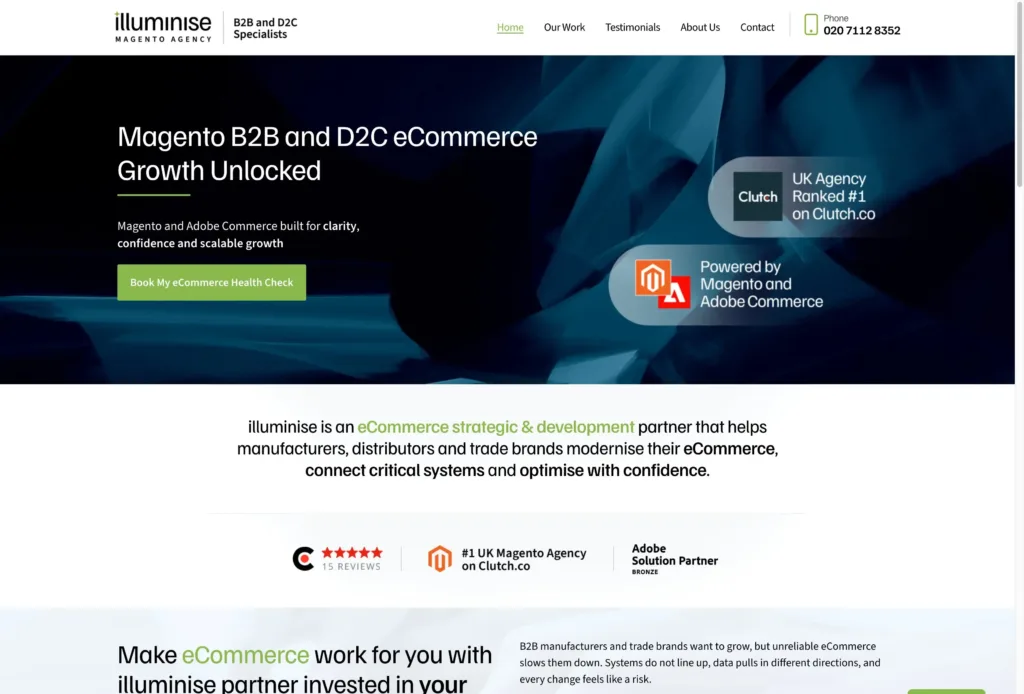
2buy1click, now operating as illuminise, is one of the leaders when it comes to migrating clients from Magento 1 or other previous systems or custom-made platforms to Magento 2 and ensures preservation of SEO positions and all of the historical data regarding the client. If replatforming is the actual job at hand, their focus here is a genuine advantage.
Best for: Merchants migrating or replatforming onto Magento 2.
7. KiwiCommerce
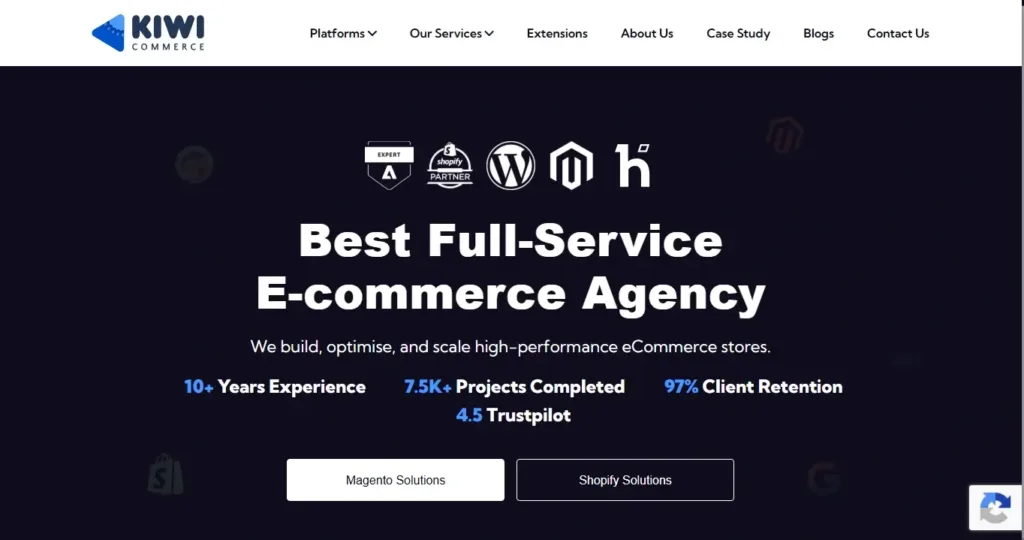
KiwiCommerce specializes in Adobe Commerce Cloud implementation and has created a global team; therefore, it has risen to fame with its implementation of cloud-based Magento building, in which it has focused on enterprise-level Magento building and solutions.
Best for: Enterprise merchants building on Adobe Commerce Cloud.
8. Gene Commerce
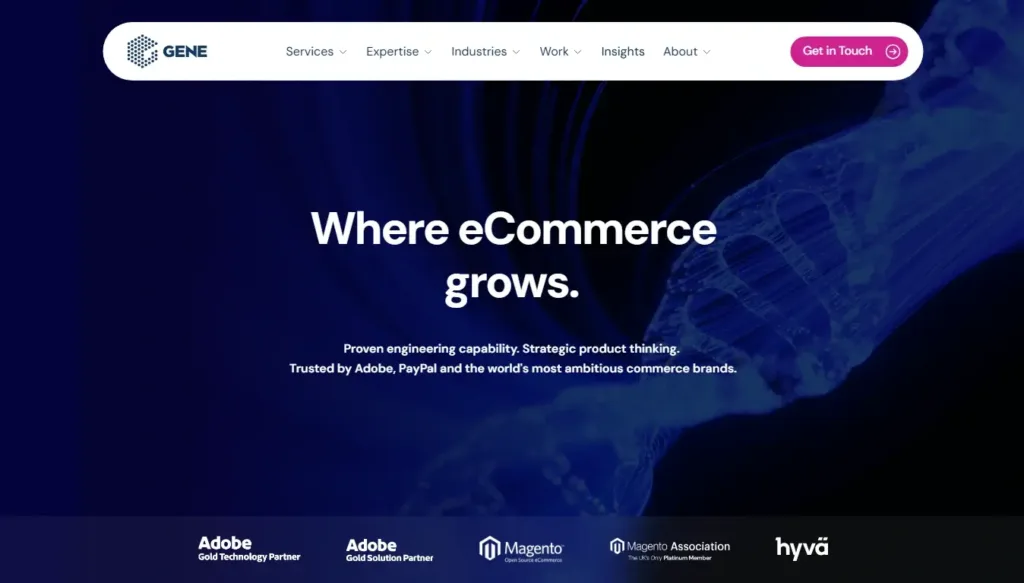
Gene Commerce is a smaller, boutique UK agency known for close, hands-on client relationships rather than layered account management. That size trade-off means less bandwidth for massive enterprise builds, but more direct access to the people actually writing the code.
Best for: SMBs wanting a close, collaborative working relationship.
9. Rave Digital
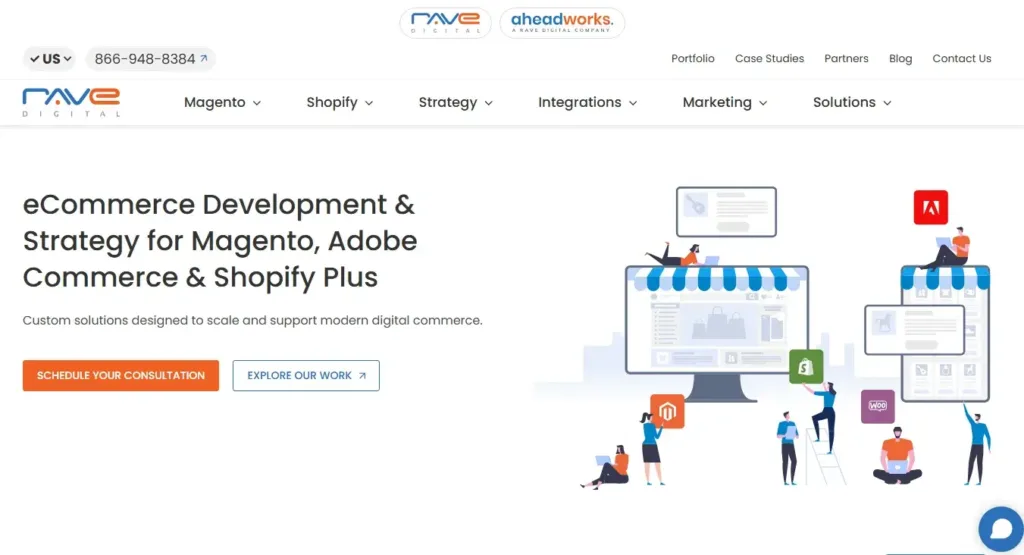
Rave Digital combines strategy, UX, and development as one integrated process rather than handing projects off between departments. Their portfolio leans toward DTC and mid-market brands that want conversion-focused storefront design baked in from the start.
Best for: DTC brands wanting strategy and design tightly integrated with development.
10. Scommerce Mage
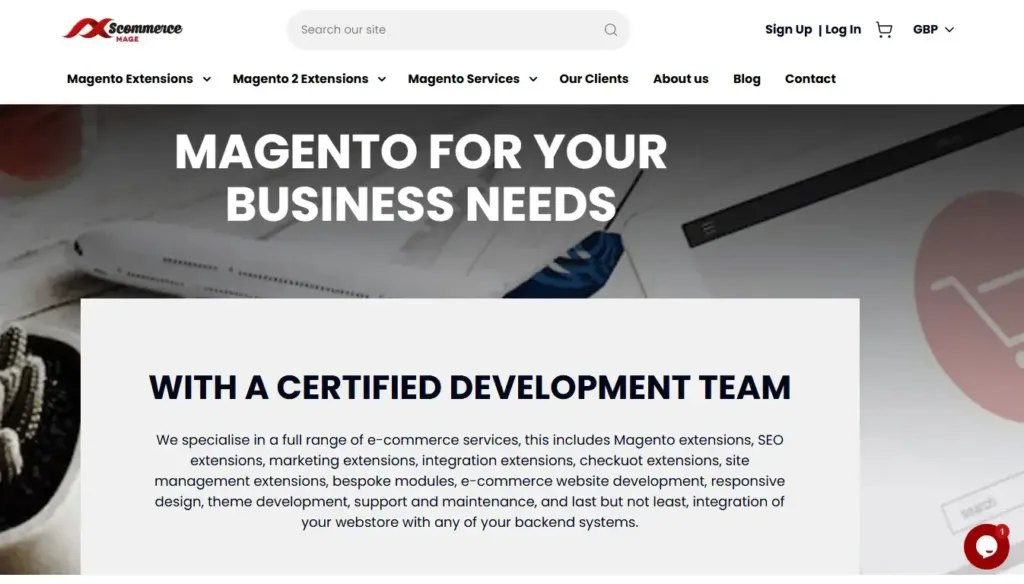
Scommerce Mage is a typical example of a Magento consultancy service, focusing on the provision of Magento consulting services. Its particular emphasis on Magento allows it to find solutions to specific challenges in the field of Magento.
Best for: Merchants wanting a Magento-only technical specialist.
What to Actually Check Before Signing
Beyond portfolios and pricing pages, a few things worth verifying directly:
- Adobe Commerce certifications – a genuine marker of technical depth, not just a badge on the homepage.
- Support after go-live – ask exactly what’s included once the store is live, because that’s where agencies vary the most.
- GDPR and UK-specific compliance experience – especially relevant for UK/EU merchants handling customer data.
- Vertical experience – B2B, marketplace, and DTC each demand different expertise; check for direct experience in your category.
FAQ
1. Is Magento 2 still worth it for UK e-commerce companies in 2026?
Yes, particularly for merchants with complex catalogs, B2B pricing needs, or multi-store requirements. Simpler stores may find platforms like Shopify sufficient, but Magento still wins on flexibility and control for more complex builds.
2. How much does it cost to build a Magento 2 store in the UK?
Price depends on the scope of work; standard storefront builds cost around £10,000-40,000, while big projects go much beyond that. Always get a quote rather than rely on approximate numbers.
3. Should I go with either a UK-based agency or hybrid/offshore team?
Both types of companies produce great results. A UK-based agency is convenient because of its geographical proximity and total time zone overlap, while a hybrid team is usually much cheaper, but still very competent.
4. How long does it take to build a Magento 2 store?
Building a Magento 2 store takes 8 to 12 weeks (this refers to standard builds). Large, custom, and migration-heavy projects take between 4 and 6 months to be completed, depending on the complexity of the projects.
5. What’s the difference between Magento Open Source and Adobe Commerce?
Magento Open Source is free and self-hosted. Adobe Commerce is the licensed, enterprise version with added B2B tools, cloud hosting options, and built-in marketing automation.