

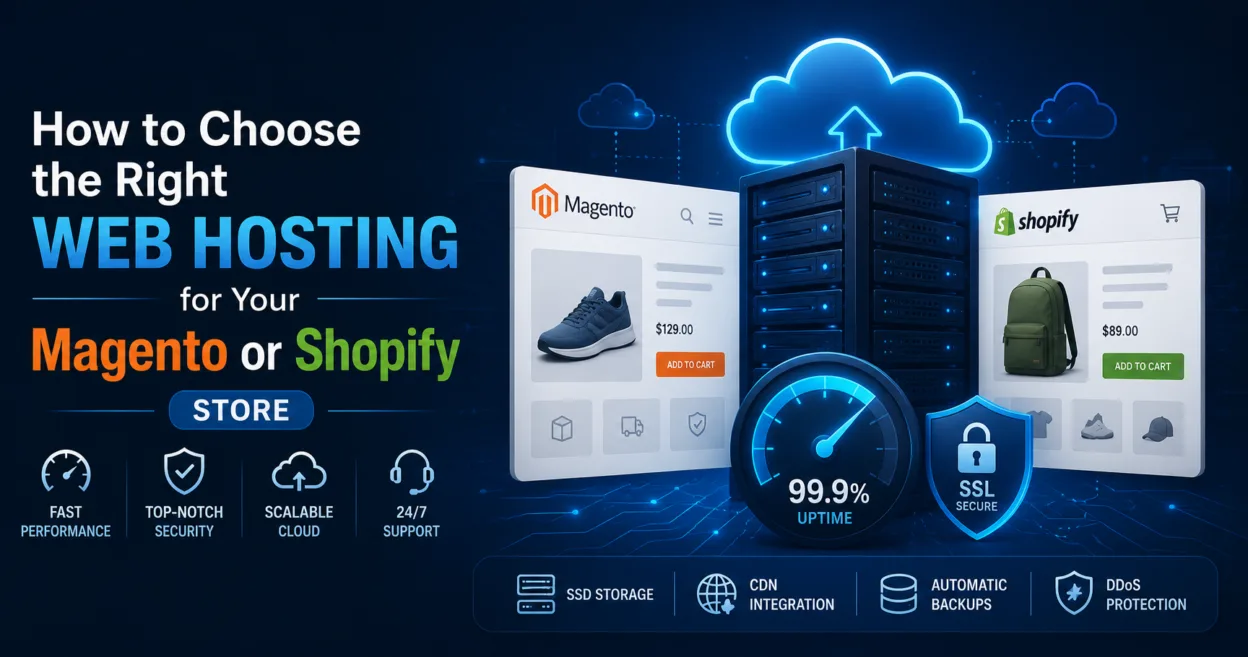
Running an eCommerce store on Magento or Shopify has its standards. And among those standards is the understanding that web hosting is more than just a background technical decision. Web hosting directly shapes how fast your store loads, how well it ranks in search engines, and whether customers trust it enough to complete a purchase.
According to a review by Cybernews, not all hosting providers deliver the same level of performance, and selecting the wrong one can silently cost you sales. In this guide, we’ll break down what to look for when choosing a hosting plan for your online store, what questions to ask providers, and why options like Hostinger have become popular among eCommerce entrepreneurs.
Why Hosting Is a Make-or-Break Decision for Online Stores
Web hosting is the infrastructure your store lives on. Every time a customer clicks on a product or enters payment details, your hosting environment determines how fast and reliably that happens. And in eCommerce, speed is money.
Research from Google and Deloitte found that even a 0.1-second speed boost can increase retail conversion rates by 8.4%. Consequently, a full second of lag can slash conversions by up to 20%. For a store generating $10,000 a month, that’s $2,000 in potential lost revenue from a single second of delay. Add in the impact on SEO, and the stakes become even clearer.
Magento and Shopify have different hosting requirements. Shopify is a hosted platform, meaning Shopify itself manages the servers. But Magento is self-hosted, which means you are responsible for choosing a hosting environment that can handle the platform’s demands. Magento is powerful but resource-hungry, and it needs a host that can keep up.
Key Features Every eCommerce Host Should Have
Before comparing providers, it helps to know what you are actually looking for. Here are the core features that matter most for Magento and Shopify stores:
Processing Power and RAM
Magento requires significant server resources to run smoothly, especially as your product catalogue grows. Look for hosts offering VPS or cloud plans with at least 2GB RAM and dedicated CPU cores. Shared hosting is rarely sufficient for anything beyond a basic test store.
SSD Storage and Fast Load Times
Solid-state drives (SSDs) are faster than traditional hard drives and make a noticeable difference in how quickly your store’s files and database queries are processed. Most reputable hosts now use SSDs as standard, but it’s worth confirming before you sign up.
Uptime Guarantees
Downtime during a product launch, flash sale, or holiday season can cost you significantly. Look for a host that guarantees at least 99.9% uptime, backed by a clear service level agreement (SLA). Some premium hosts guarantee 99.99%, which translates to less than an hour of potential downtime per year.
Security Features
eCommerce stores handle sensitive customer data, including payment information. Your host should provide free SSL certificates, automated daily backups, DDoS protection, malware scanning and removal, and firewall protection. These are not optional extras — they are the baseline for any store handling customer data.
CDN Support
A Content Delivery Network (CDN) distributes your store’s content across global servers, so customers in different countries get fast load times regardless of where your main server is located. This is especially important if you sell internationally.
24/7 Support
When something goes wrong with your store, you need help fast. Look for hosts with responsive live chat or phone support around the clock — not just a ticketing system that takes 24 to 48 hours to respond.
Shared, VPS, or Cloud Hosting: What’s Right for Your Store?
One of the first decisions you’ll face is the type of hosting environment. Here is a quick breakdown of your main options:
- Shared Hosting: Best for very small or test stores, but limited in resources and poor under traffic load.
- VPS Hosting: A strong choice for growing Magento stores. Offers dedicated resources with more control over the server environment.
- Cloud Hosting: Ideal for scalable, high-traffic stores. More flexible but can cost more.
- Dedicated Hosting: Best for large enterprise stores that need maximum control and performance.
For most growing Magento stores, VPS hosting is the sweet spot. It gives you dedicated resources and more control over your server environment without the cost of a full dedicated server. Businesses looking for a balance between performance and affordability often start with Contabo low-cost VPS before upgrading as their traffic and infrastructure requirements grow. Shopify users, since the platform handles hosting, should focus more on apps and integrations, but those building custom or headless Shopify storefronts will still benefit from understanding server infrastructure.
What You Pay for Using the Wrong Web Host
Choosing unsuitable hosting might feel like smart cost-cutting early on. But the real price of getting this decision wrong often shows up where it hurts most. Many store owners don’t realize how much their hosting choice affects day-to-day business performance until something goes wrong. By then, the damage to revenue, rankings, and reputation is already done. Here is what store owners actually lose:
Lost Revenue from Slow Load Times
Every extra second your store takes to load pushes a customer closer to leaving. Load times above two seconds consistently drive higher bounce rates and fewer completed purchases, and even a small dip in conversions compounds into high income lost across a year of trading. In a competitive eCommerce market, where customers have dozens of alternatives a click away, a sluggish store is one they won’t return to.
Damaged Search Rankings
Google factors page speed and uptime directly into its ranking algorithm. A slow or frequently unavailable site quietly slides down search results, costing you organic traffic that takes time and real money to recover. The longer you stay on poor hosting, the more ground you lose — and rebuilding that visibility is far harder than maintaining it.
Security Gaps and Costly Downtime
Budget hosts often cut corners on security infrastructure. A breach or extended outage during peak sales can mean lost orders and lasting damage to customer trust. This also presents a potential legal exposure if customer data is affected.
Poor Support When You Need It
When your store goes down before a major sale or product launch, slow or unresponsive support is beyond frustrating, and the cost shows up directly in missed revenue and lost customers.
How to Evaluate Any Hosting Provider Before You Commit
Before signing up, run through this checklist:
- Check independent reviews on platforms like Cybernews, G2, or Trustpilot
- Test their support by sending a pre-sale question and noting how quickly and helpfully they respond
- Look for a money-back guarantee — most reputable hosts offer 30 days or more
- Read the fine print on renewal pricing, as introductory rates often increase significantly at renewal
- Check server location options to ensure data centers are close to your primary customer base
- Confirm they support your eCommerce platform’s technical requirements (PHP version, extensions, etc.)
Conclusion
The right web hosting is one of the most important investments you can make for your Magento or Shopify store. It affects your store’s speed, security, search engine rankings, and ultimately, how many visitors convert into paying customers.
Take the time to evaluate providers based on real performance data, not just marketing copy. Read reviews from trusted sources, ask questions before committing, and choose a plan that can grow with your business. A well-hosted store runs faster, ranks higher, and converts better. The difference shows up directly in your revenue.