Why I Started Looking at Promova
If you run an ecommerce or tech business, you eventually hit the same wall: English might be your default, but your customers, partners, and even team members are not always on the same language level. Support tickets take longer, demo calls feel awkward, and simple miscommunication turns into refunds or bad reviews.
That’s how I first got interested in Promova – not as another “fun app with streaks,” but as a language platform that tries to solve real communication problems for individuals and companies. It combines an app for self-paced learning, AI speaking practice, and corporate training programs that are clearly designed with global teams in mind.
What Promova Offers to Individual Learners
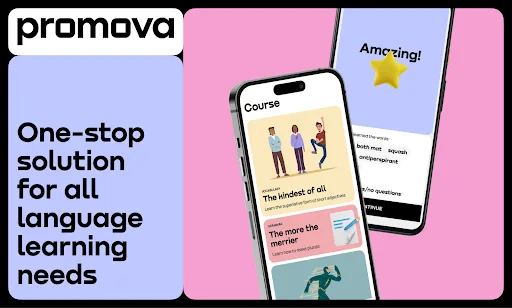
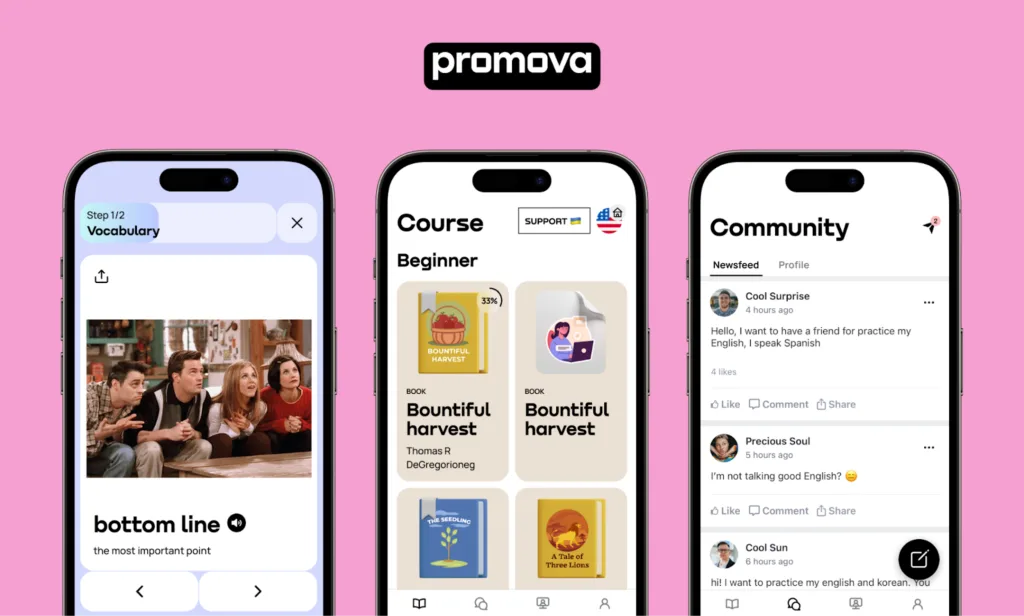
On the individual side, Promova, one of the best language-learning apps, is a mobile-first app with short, focused lessons. You can choose from several languages and start with a quick level test, after which the app builds a learning path around your goals – travel, work, relocation, or just brushing up your skills.
A few things feel especially relevant for busy professionals:
- Lessons are short and structured around everyday situations, so it’s realistic to learn in 10–15 minute blocks between meetings.
- There’s an AI tutor and AI role-play that let you practice speaking in safe, simulated conversations and get instant corrections, which is less stressful than jumping into live calls right away.
- The platform covers not only general English but also more specific topics like business communication, presentation skills, and work-related vocabulary.
According to Promova’s public stats, the app has over 23 million downloads and maintains a strong rating in app stores, which suggests people actually use it beyond the first week of enthusiasm.
“Learn with Usyk”: Motivation Wrapped in a Story
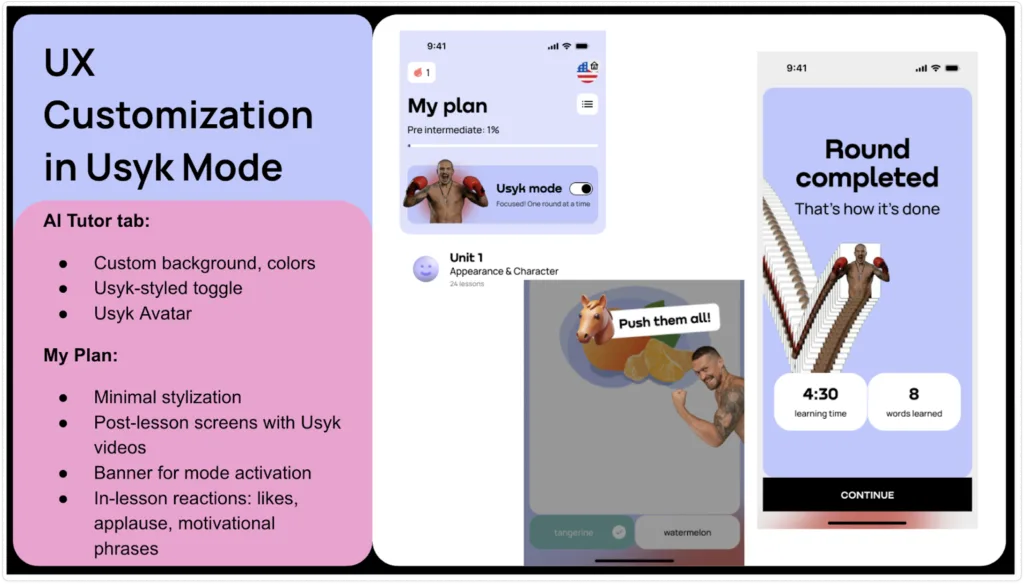
One of the more unusual parts of Promova is its collaboration with heavyweight boxing champion Oleksandr Usyk. Instead of just putting his face in an ad, the team built a “Learn with Usyk” experience inside the product.
This track focuses on discipline and consistency more than raw motivation. Users get access to:
- Content inspired by Usyk’s training routines and mindset, adapted for building learning habits.
- AI-powered role-play that lets you “train” in English with an AI version of Usyk, which turns speaking practice into something a bit more engaging than talking to a generic chatbot.
It’s a clever way to turn a brand partnership into something that actually affects user behavior, not just campaign banners.
Promova for Business: Language Training for Global Teams
For companies, Promova offers a dedicated solution called Promova for Business. It’s essentially a corporate language learning program built on top of the same app, but with extra structure and analytics.
Here’s what stands out from a business point of view:
- Teams get one year of Promova Premium, with access to 12 languages across different levels, which is useful if you have multilingual support or international operations.
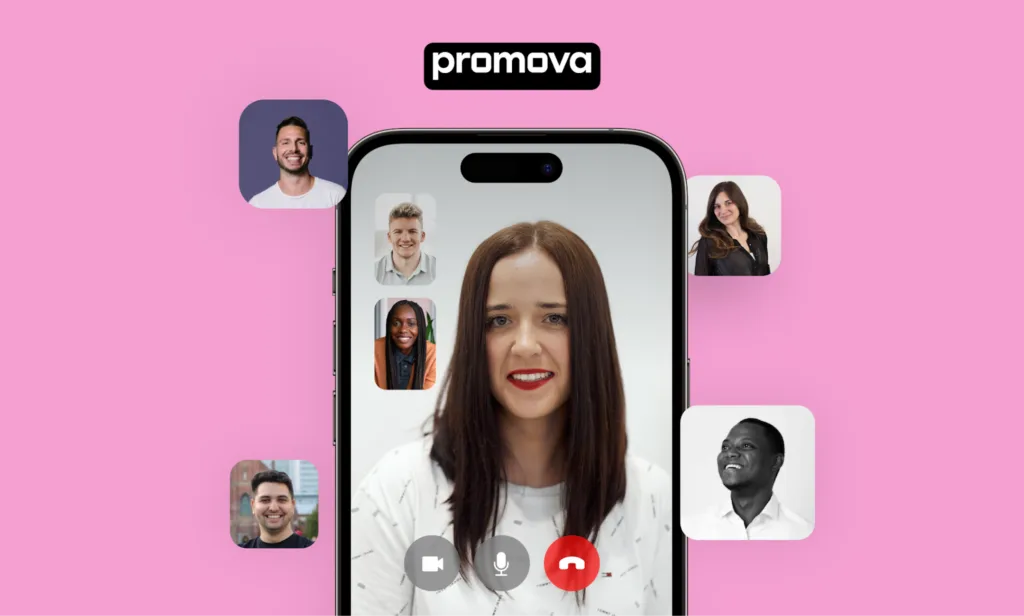
- Employees can use AI role-play for specific business scenarios – meetings, presentations, negotiation, support calls – and get real-time feedback on pronunciation and phrasing.
- For larger teams (51+ users), Promova adds onboarding support, reporting, and a more “managed” experience so HR or team leads can actually track usage and progress.
The official positioning is quite clear: Promova Corporate is “a one-stop language learning solution for global teams,” especially those who work in English but don’t feel fully confident in professional contexts like support, marketing, or engineering stand-ups.
How Promova Designs Its Learning Experience (with Elly Kim)
A lot of what makes or breaks a language app is the quality of its content. At Promova, e-learning lead Elly Kim plays a key role here. She previously worked as an ESL teacher for more than five years and now creates educational content for the platform.
Kim speaks multiple languages herself (English, German, Korean, and more), and she often writes about very practical topics on the Promova blog – things like business acronyms, startup vocabulary, and customer-facing phrases for hospitality or medical workers. Her approach is straightforward: learners should see how to use each phrase in a real situation as soon as possible.
In her articles, she stresses that effective lessons are short, focused, and clearly tied to what you do in everyday life: “If the expression you learn today appears in tomorrow’s email or meeting, it’s much easier to remember it.” That philosophy is visible in the in-app lessons as well – they feel built around tasks rather than textbook chapters.
What Other Business Owners Say About Language Training
Talking to founders and operators, you notice a shift in how they see language learning. It’s no longer a “nice perk” but a direct lever for revenue and customer experience.
- A SaaS founder shared that every misunderstanding on a sales call has a cost: “We lost at least two deals simply because we couldn’t clearly explain technical limitations to non-native speakers. Investing in language training was cheaper than repeating that mistake.”
- A hospitality manager pointed out how targeted English training for frontline staff improved online reviews and upsell opportunities: guests felt heard and understood, so they were more open to extra services.
- An ecommerce owner running a remote support team mentioned that switching from generic English courses to business-focused content (similar to what Promova offers) made refund conversations and policy explanations much smoother. Customers reacted better when messages sounded natural instead of “translated.”
These stories line up with what Promova is trying to solve: not just “better English,” but fewer frictions in the everyday workflows of global teams.
Practical Tips If You Want to Use Promova for Your Business
If you decide to test Promova in your company, it helps to treat it like any other tool in your stack: define where it should move the needle, and then structure usage around that.
A few practical tips that came up in conversations with founders and team leads:
- Anchor it to one workflow first. Start with a clear use case like support emails, live chat, or demo calls. Ask the team to pick modules that match those scenarios, instead of “learning everything.”
- Combine AI practice with real examples. Encourage employees to use AI role-play for repetition, then review real tickets or call snippets once a month to see how language and tone change over time.
- Be realistic about time. Most companies that see results treat language training as a 6–12 month project, not a one-month sprint. Short, consistent sessions beat occasional marathons.
- Track and celebrate wins. When someone handles a difficult case in their second language or manages a complex negotiation call, log it and connect it back to training time. That makes it easier to justify the budget and keep people motivated.
For Magento and ecommerce merchants, especially those selling internationally, this kind of structured training can quietly reduce support costs, improve CSAT, and make sales conversations smoother – all without forcing your team to drop everything for traditional language schools.