

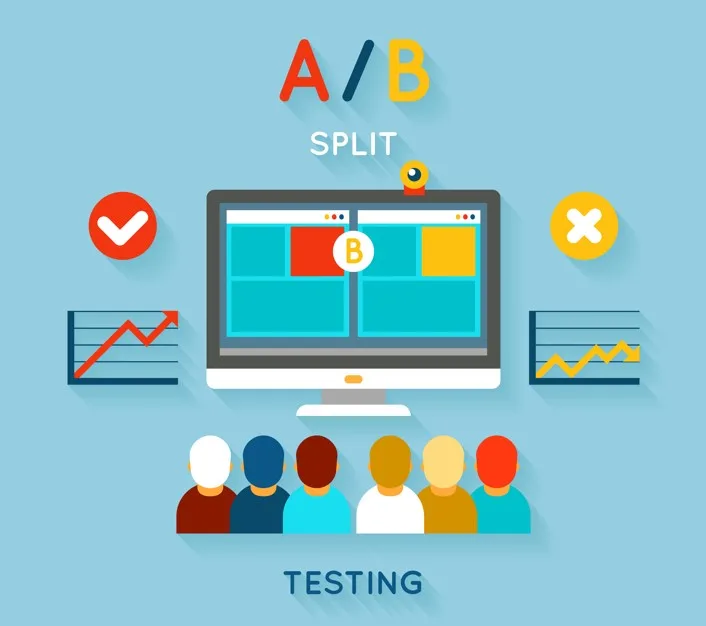
When someone searches for a chiropractor in your area, your website becomes your first consultation. Within seconds, they decide whether they trust you enough to schedule care. That is why A B testing for healthcare websites plays a critical role in your patient acquisition strategy.
Medical website A B testing helps you understand what truly motivates patients to book. From refining service headlines to improving call-to-action buttons, small changes can improve patient booking rates without increasing ad spend. Instead of guessing, you rely on data-driven healthcare marketing.
When implemented with HIPAA compliant A B testing and healthcare website best practices, this process becomes part of a data-driven healthcare marketing approach. Many practices integrate these strategies within broader chiropractic marketing efforts to create consistent, scalable growth.
Let’s look at how to turn testing into meaningful results.
6 A/B Testing Ideas for Healthcare Websites
1. Test Headlines and Value Propositions on Key Service Pages
When someone lands on your chiropractic service page, they decide within seconds whether you understand their pain. Through A/B testing for healthcare websites, you can compare pain-focused headlines against benefit-driven messaging. For example, test a relief-focused promise against a same-day appointment message to see which drives more appointment requests.
You can also experiment with hero image testing healthcare by comparing a professional provider photo with an outcome-focused patient image. Video vs image testing or explainer video testing often increases dwell time on medical sites and improves healthcare website user experience. These refinements support landing page optimization healthcare efforts, reduce bounce rate healthcare impact, and strengthen patient trust signals.
2. Optimize Call to Action Buttons and Placement
Once visitors engage, your call to action determines whether they convert. Through CTA button testing, compare wording such as a general booking phrase against a more specific service-driven message. Above the fold CTA testing ensures your booking option appears immediately, while color contrast CTA testing improves visibility.
A sticky header testing approach with a persistent booking button can support online appointment scheduling optimization, especially for mobile users. Phone number click to call testing further helps optimize for mobile patients. These updates strengthen CRO for medical practices by improving conversion funnel testing results and increasing measurable appointment requests.
3. Test Appointment Forms and Booking Flows
Even motivated patients abandon forms that feel overwhelming. Medical website A/B testing allows you to compare short vs long intake forms and evaluate whether a multi-step format improves completion rates. Appointment form testing can also compare a traditional contact form against a chatbot vs contact form testing setup.
Pop-up form testing, healthcare, or exit intent pop-up testing can recover abandoned visitors when used carefully. With proper HIPAA-compliant website tracking and conversion tracking setup for healthcare, you gain accurate insights without compromising privacy. This improves form optimization for healthcare, strengthens patient journey optimization, and supports lead generation testing healthcare efforts.
4. Experiment With Trust Signals and Social Proof Placement
Trust drives healthcare decisions. Patient testimonial placement near booking buttons often increases appointment requests because reassurance appears at the moment of decision. Patient review display testing and Google reviews integration testing can reveal whether social proof performs better above or below your primary call to action.
You can also test trust badge placement testing, privacy policy placement testing, security seal testing, and SSL trust indicators visibility. These signals support optimizing patient trust signals and improving online reputation signals. For a chiropractic practice, showcasing verified reviews beside scheduling options directly influences conversion rate optimization and healthcare outcomes.
5. Optimize Page Layout, Navigation, and Mobile Experience
Design influences behavior more than most practices realize. Navigation menu testing can simplify access to key services, while service page layout testing clarifies your value proposition. Before and after design testing often highlights how small structural changes affect engagement.
Mobile optimization testing and responsive design testing are essential as more patients search from their phones. Page speed optimization, healthcare improvements, and Core Web Vitals healthcare sites performance reduce friction and improve bounce rate healthcare metrics. Use heatmap analysis, healthcare, scroll depth tracking, and UX testing for medical websites to guide decisions that enhance healthcare website user experience and patient journey optimization.
6. Test Landing Pages for Campaign and Local SEO Traffic
Traffic sources behave differently, so your pages should reflect that. Google Ads landing page testing, healthcare, and campaign-specific landing page testing allow you to tailor messaging to search intent. Retargeting landing page testing can focus on reassurance for returning visitors.
Geo-targeted messaging testing for city-specific chiropractor pages supports optimizing for local SEO conversions. New vs returning patient testing and persona-based testing healthcare further refine your approach. With GA4 event tracking, medical websites and healthcare marketing analytics, you can measure statistical significance in testing, improve cost per lead healthcare, increase ROI healthcare marketing, and support a sustainable medical practice website growth strategy.
Conclusion
A B testing for healthcare websites directly improves patient booking rates by refining what truly resonates. Instead of increasing your marketing budget, you optimize marketing spend on healthcare efforts through data-driven healthcare marketing and continuous optimization of healthcare sites. Many practices partner with teams specializing in chiropractic marketing to implement structured CRO testing and sustain long-term website performance gains.